
FOBO:
Financial intelligence education for kids.
“ With limited resources to create the greatest happiness, financial management is only one of the means, wealth is also just a tool, the ultimate goal is always a happy life. Financial literacy education is not just about skills, it's about character. ”
Background
This was a side project we did for learning and practicing the UCD process. The research and the first version of design were finished by team of 4 in January, 2020.
Additional usability studies and UI updates were completed by me in March, 2020.
My Role
User Research, Product Design, Interaction Design, Prototyping
Team
One Product Manager, One User Researcher, Two Designers
Duration
4 weeks collaboratively + 2 week Individually
Research & Design Process
👀Objectives & Hypothesis
Problem Space
Audience Research
User Interviews
📚Methods & Synthesis
Questionnaire
Persona
Journey Map
💡Ideation & Design
User Flow
Wireframing
Usability Testing
✍️Evaluation & Deliver
Prototype Flow
User Scenario
Hi-fi Prototypes
Design Sprint Timeline
PROBLEM
Some hot issues of social concern in recent years reflect the lack of money value education for children in China: The concept of money for the minors is still very vague. For minors to spend a large sum of money to reward the streamers’ event, indicating that children's minds are not mature. They will be distorted by the wrong ideas of consumption, which will also increase the burden on some families.
Research shows that 5-12 years old is the critical period for children's financial education. At this stage, children's healthy money value and consumption view have not yet formed a stable habit. Schools, parents and society should take active action at this time, through a variety of financial intelligence education activities, guide children to establish a correct and positive money concept.
Therefore, I raised the question:
How Might We help children to develop a positive, self-reliance, good at planning in advance of the person in charge of the financial concept ?
SOLUTION
Interaction Prototype (Polishing Ongoing)
AUDIENCE RESEARCH
The Kindergarten - Usually using virtual currency recycling, without long-term financial intelligence education program.
Generally, it are some role-playing games for children to get virtual currency in the bank and spend money in the “online supermarket” to help them understand the process of basic transactions, which is similar to the popularization of life knowledge. Concept of money cultivation: it belongs to a short-term activity, the end of which is the virtual currency recycling, and the record of no bank account. There is no long-term financial intelligence program.
The Parents -They are lacking of planning and specific knowledge, they do not know how to start and lacking of direction and better auxiliary tools.
Most parents have the intention to cultivate their children's financial intelligence, but generally they are lacking of planning and specific knowledge, they do not know how to start and lacking of direction and better auxiliary tools. Especially in view of the less and less use of physical money, how to cultivate the correct and healthy concept of money and the concept of virtual currency made many parents headache.
The Exports - Experts suggest that the child financial intelligence training program is:
Age 3⃣️: Recognize notes and coins;
Age 4⃣️: Learn to use money to buy simple things, such as paint brushes, bubble gum, snacks;
Age 5⃣️: Understand that money is the reward of labor, and the correct exchange of money and goods activities;
Age 6⃣️: Can count a large number of money, began to learn to save money, develop "their own money" awareness;
Age 7⃣️: Can get a sense of the price tag of goods and their own money, to confirm their purchasing power;
Age 8⃣️: Know how to deposit money in a bank account and find ways to earn pocket money, such as getting paid for selling used newspapers.
Preliminary Summary -
The following aspects should be taken as the starting point to cultivate children to establish a correct money concept:
Develop self-reliance
Pay for your own expenses
The correct view of money gains and losses
Parents play as an exemplary role.
USER INTERVIEWS SUMMARY
The overall insights and opportunities from user interviews:
Parents of the New Year's ‘red pocket money’ to control the children have a little negative emotions - their own bookkeeping, parent-child wallet and timely understand the details
Generally worries for addictive using the electronic product - 20min time limit + overtime card
Influence of parents on children's concept - introduction of parent-side platform to accompany children in participatory learning, expecting increase of parent-child time (offline)
METHODS
1. Questionnaire
We received a total of 94 valid questionnaires and obtained preliminary analysis results based on our questionnaire protocol, on which we made the visual data graphs are also as follow:
The overall insights from questionnaires:
More than 2/3 of the surveyed parents have the sole right to decide their child's allowance
Most parents believe that their children do not or lack the ability to judge money and have the will to cultivate it
Half of parents will make systematic records of children's consumption expenditures, and (bookkeeping) and other recording tools have certain needs for use
Most parents' incentive spending on children mainly focuses on going out and toys, and about 20% of parents consider electronic products and other forms
Most parents are willing to pay for reasonable financial intelligence education products for children
2. Secondary Research
According to the research reports, we summarized the development level table of children of all ages:
The overall insights and opportunities from secondary research:
Financial education for 5-12 year olds is a critical period, but there are many flaws and deficiencies in the current market (kindergarten/parenting specialist) approach - discovering opportunities and needs
Children of all ages have different cognitive abilities - customization is needed
Parents are inexperienced and worried about misleading - a systematic approach to parenting
How to increase parent-child companionship - online and offline community
Parental involvement - parents’ feedback
👆The insight above will pave the way for us to initialize the predictive age stratification later.
3. Persona
The significance of the persona is to help us understand the user's needs, imagine the user's use of the scene, we expect to see the user's deep motivation and psychology through the user behavior image, and to pave the way for the user's journey map
The overall insights and opportunities from persona:
Children's willingness to learn - games, situations, children are curious and playful
In the new information age, the cognition of virtual coin is weak, but it also needs the teaching of AR application
Parents do not know how to reward children - rewards mall
4. User Journey Map
Through the user journey map, we wanted to ensure that all of our ideas and requirements become visible design solutions - The 5 highlighted ones in purple
IDEATION
1. From User Needs to Product
From the previous brainstorming, background research, user interviews and questionnaires, we obtained inspirational insights
We explored from demand mining management to product planning definition, summarized, analyzed and logically sorted out, and further promoted our products
2. HMW Qs & Product Positioning
3. Design Highlight
DESIGN & EVALUATION (Ongoing)
From problems to solutions
User Flows
Through the user flow chart, the specific steps of the user experience process are intuitively described, and the operation mode of the next step is judged by using the logical branch of "yes" or "no" to form a small closed loop.
👆Above three product structure flows show how to meet the user's specific needs in each of these three specific scenarios
Wireframing
Usability Testing
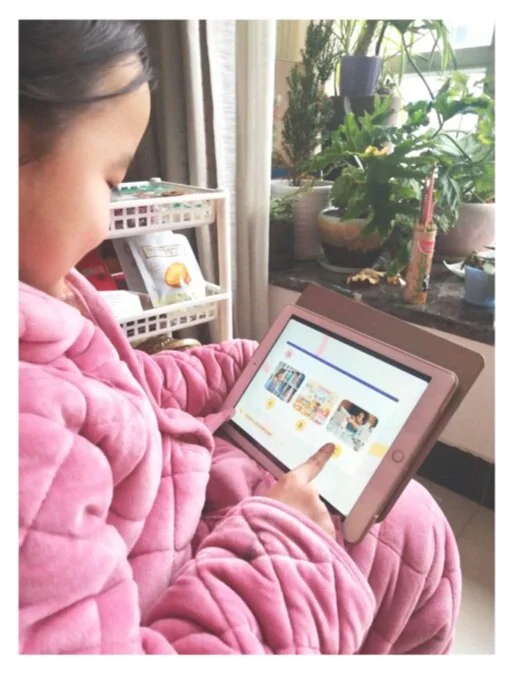
What did we test
Primarily to see if children could interact meaningfully with the product
Effectiveness
Time and accuracy
Satisfaction
Finding usability problems
What did we test - primarily to see if children could interact meaningfully with the product
A - Effectiveness (proportion of tasks completed independently)
B - Time and accuracy for completing the task
C - Satisfaction (users' subjective evaluation of operation difficulty/favor/intention to use again)
D - Finding usability problems (e.g., frustration shown by users in use/not seeing what they should see/saying they did the job but didn't/deviating from the successful operation)
What did we conclude
A - effectiveness: for older children with a certain basis in arithmetic, most of them can understand the function of the product and have the ability to complete tasks independently. But for children under 6 years of age, certain AIDS are needed, and the product can lose some functions
B - Likewise, there is a slight difference in completion time among different age groups, with preschoolers taking longer
C - children are interested in the cute interface, some voice functions are also good to help them understand the product, and financial games can also attract their attention and play a role in cultivating financial intelligence
D - Younger children can't fully understand the product's meaning and tend to lose patience; Most children are still not interested in bookkeeping. Even though they are attracted by AR function at the beginning, they are still easy to give up bookkeeping
What we learned from the users’ feedback & testing iteration
Focus on specific age for functional refinement, make the product more targeted
More diversified and interesting methods are needed to cultivate financial intelligence for children
FINAL DESIGN
How we solved the problems
Refining IA (Information Architecture)
IA for Kids
IA for Parents
Prototype Flows and 3 Main User Scenarios
👇 Here are three basic product structure flows, showing how to meet the user's specific needs in each of these three specific scenarios
👇Here are three main user scenarios represented through dynamic prototypes
1. Customized Setup
The first is initialization Settings, which can be tailored to children's preferences and needs.
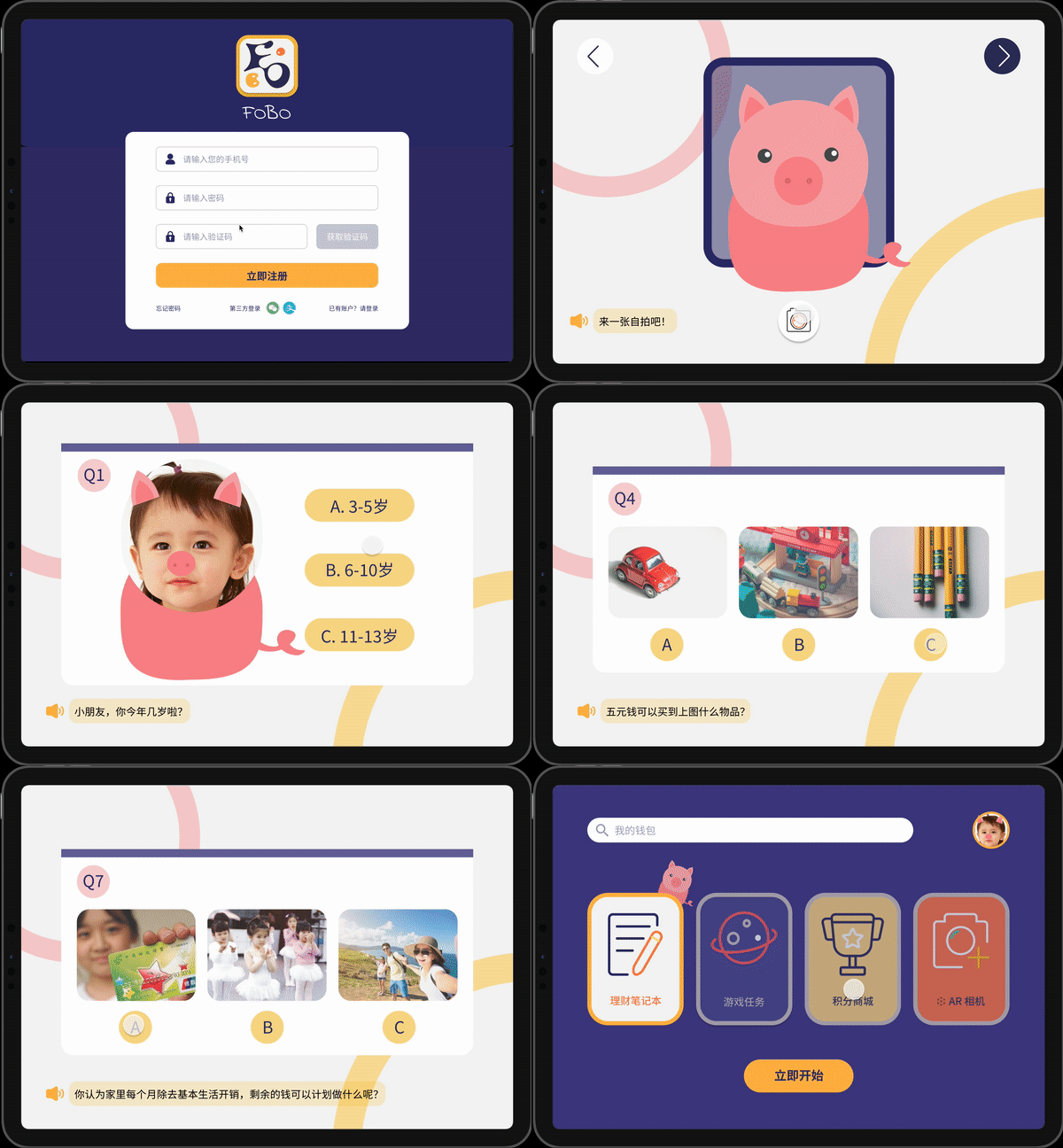
Customized Set up
2. Interactive game and Rewards
Real-time feedback is available at every stage of learning, and rewards in the points mall give children moments of pleasure in recognizing their efforts and achievements
To address parents' concerns about their children's excessive use of electronic devices, set a time limit for each time the device is turned on. If the game is not completed or wish to add a little more time, kids can use the credit to add time card
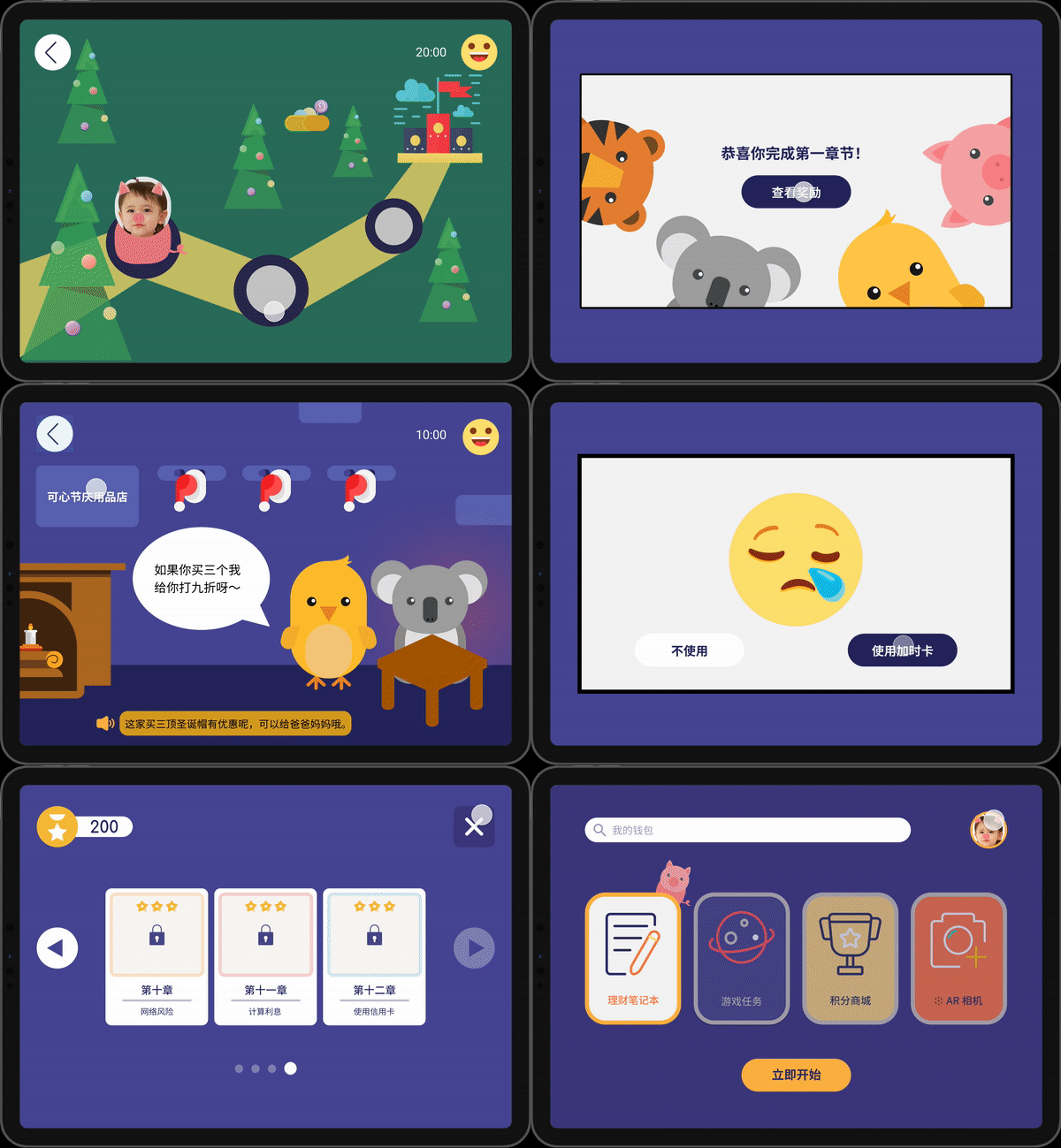
Interactive game and Rewards
3. AR Studio and Bookkeeping
We encourage children to think more, and let them actively record every purchase and develop good financial habits
The application of AR technology enables children to actively participate in learning, including the recognition of the value of objects, the identification of receipts, and the identification of notes, etc., so as to improve their independent thinking and analytical ability.
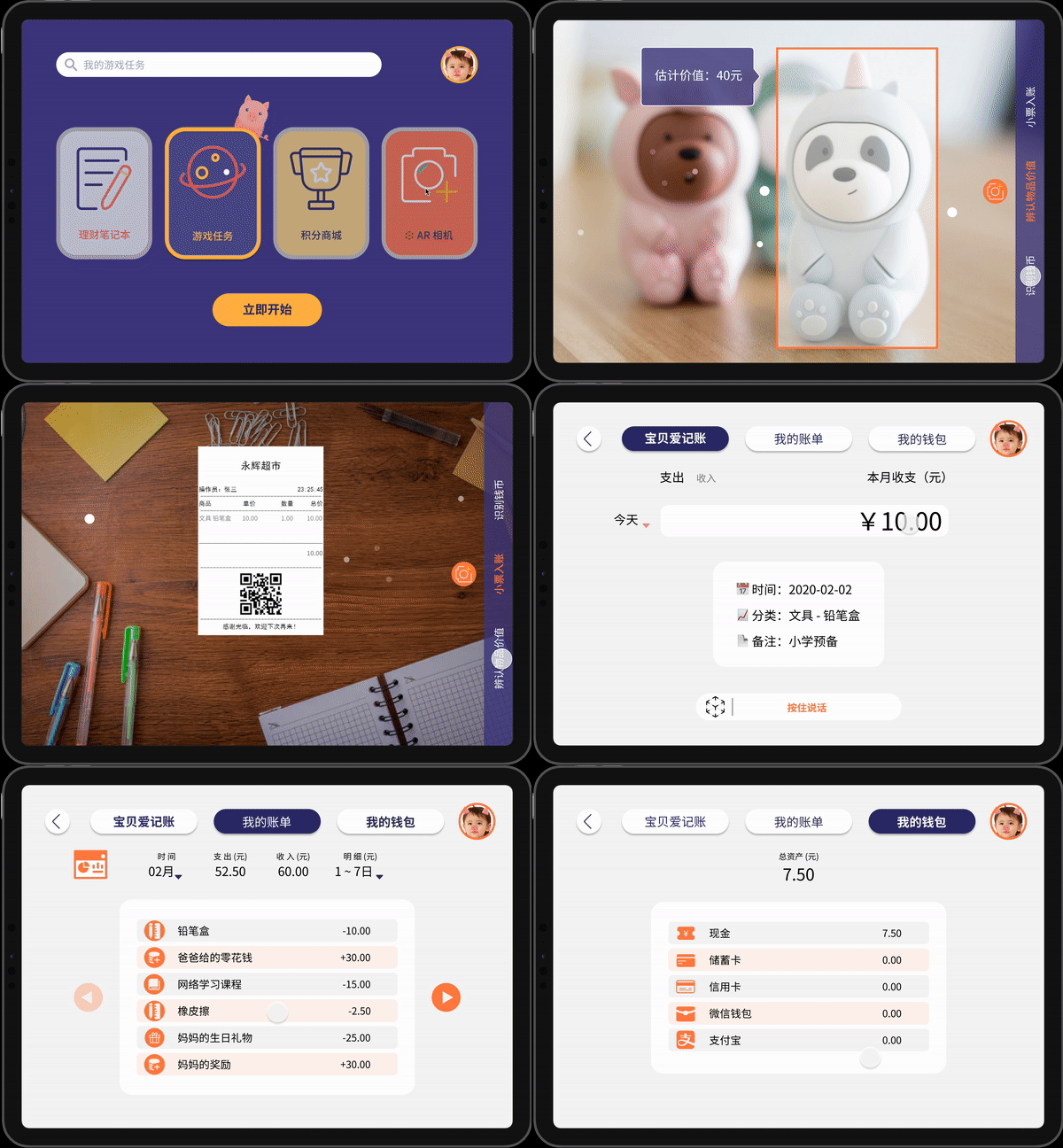
AR Studio and Bookkeeping
TAKEAWAYS
Cover ALL the ideas
Because each team member has many thoughts and ideas about this product, there are often differences of opinion, and there have been some problems in the design process. What our group did was everyone came up with a detailed plan, discussed it, and finally came up with the satisfactory product.
Empathy, empathy, empathy
Four unmarried teenagers have a hard time imagining what their parents think. What we choose to do is to put ourselves in the situation and consider what we will do as parents if we encounter problems. Finally, we find the problem we want to solve most in the parents-children's forum. The process of interviewing children is also a headache. It is difficult for a five-year-old to speak his mind like an adult, and the interviewer needs to think of himself as a child to really discover something new.
Iteration and Collaboration
In a real work environment, designing is a team sport, and it is important for UX designers to effectively communicate design decisions and product iterations from the beginning of the project through implementation. The ability to understand the motivations of developers, product managers, marketers, and other designers is critical to UX designers.
UX Design is an ongoing process
The UX design will evolve over time as new technologies evolve and new feedback is received. As the product develops and changes, the user experience design also needs to be updated.